
Signs You Need Professional Drain Cleaning in Salt Lake City
Drains rarely fail without warning. Most of the time they give you plenty of signals before things get bad enough to cause real damage. If any of these sound familiar, it’s worth getting us out to take a look.
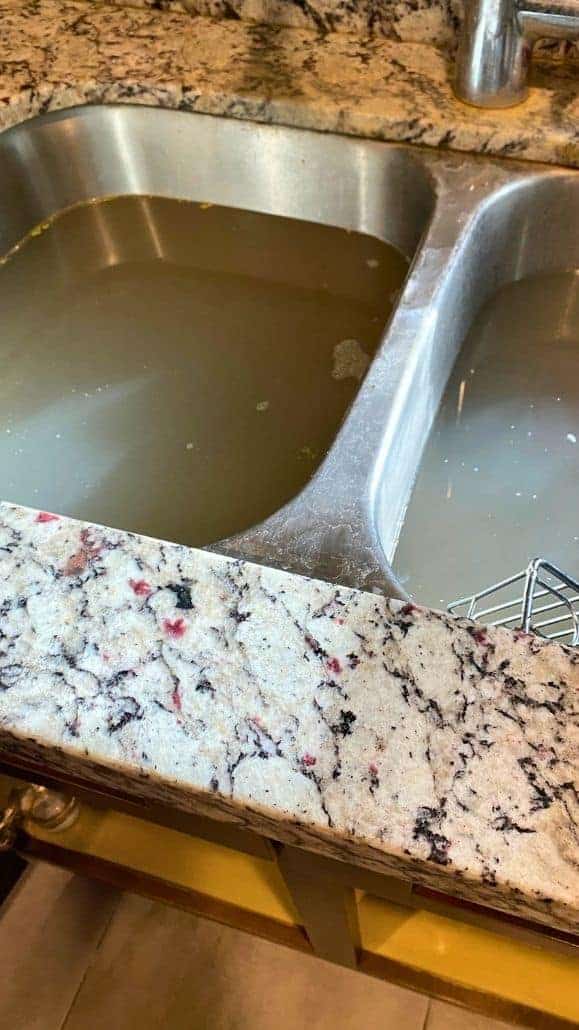
- Water is draining slowly in one or more sinks, tubs, or showers
- You’re seeing standing water that takes several minutes to clear
- The toilet gurgles when you run the bathroom sink, or vice versa
- Drains are making a bubbling or gurgling sound on their own
- There’s a persistent smell coming from a drain (sulfur, sewage, or something musty)
- Water backs up into the tub or shower when you flush the toilet
- You’ve tried store-bought drain cleaner and the problem keeps coming back
- There’s visible buildup or slime around the drain opening
- One drain clears fine but the same fixture keeps clogging every few weeks
- Floor drains in the laundry room or garage are holding water
A single slow drain is usually a localized clog. Multiple drains acting up at the same time points to something deeper in the line. Either way, we can find it.
Family-owned & local
Licensed & insured in Utah
Upfront flat-rate pricing
Workmanship guarantee
Expert Drain Cleaning Services In Salt Lake City, UT
Our techs clear clogs and buildup in every drain type you’ll find in a Salt Lake City home.
Kitchen Drains
Grease, food scraps, and soap residue build up fast in kitchen lines — especially with hard Utah water accelerating the process. We clear the clog and clean the pipe wall so it doesn’t come right back.
Bathroom Sink Drains
Hair, toothpaste, soap scum, and mineral deposits are the usual culprits. Bathroom sink clogs are common and almost always clearable in a single visit.
Shower & Tub Drains
Hair is the obvious one, but soap scum and hard water scale build up on pipe walls over time and narrow the opening. We clear the blockage and inspect the drain assembly while we’re there.
Toilet Clogs
Most toilet clogs sit close to the trap and clear quickly. If the toilet is backing up repeatedly or gurgling when other fixtures run, there’s likely something else going on further down the line.
Laundry & Utility Drains
Lint, detergent residue, and sediment collect in laundry drain lines over time. Slow-draining washing machines and backed-up utility sinks are a common call we get in older Salt Lake homes.
Floor Drains
Basement and garage floor drains collect debris, sediment, and mineral buildup — and tend to get ignored until they’re fully blocked. We clean and test them to make sure they’ll actually do their job when you need them.
Common Causes of Drain Clogs
Most clogs come down to a handful of culprits. Here’s what we see most often in Salt Lake City homes and what clearing them actually looks like.
Grease & Food Buildup
Cooking grease goes down the drain as a liquid and solidifies on pipe walls as it cools. Food scraps — even small ones — catch on that sticky surface and build up over time. The fix is snaking or hydro jetting the line to break up the accumulation and flush it clear.
Hair & Soap Scum
The most common cause of slow shower and bathroom sink drains. Hair tangles around the drain stopper and catches everything else that comes through. Soap scum and hard water minerals bind it together into a stubborn mass. We pull the blockage and clean the pipe wall so it doesn’t rebuild quickly.
Hard Water Mineral Scale
Salt Lake City’s water is some of the hardest in the country. Calcium and magnesium dissolve out of the water and deposit on pipe walls, gradually narrowing the opening. Over years, scale buildup alone can cut drain flow significantly — even without any other clog present. This is one reason Utah drains tend to need professional cleaning more often than the national average.
Tree Root Intrusion
Mature trees in Salt Lake’s older neighborhoods — cottonwoods, silver maples, elms — send roots toward any available moisture. Hairline cracks in older drain pipes are enough of an invitation. Once roots get in, they catch debris and grow into a serious blockage. If we find root intrusion on a drain line, we’ll let you know and point you toward the right next step. Root intrusion is one of the most common triggers for a full sewer line repair, so it’s worth catching before it turns into a blockage.
Foreign Objects
Kids’ toys, cotton swabs, wipes labeled “flushable” (they’re not), and small personal care items are a common cause of toilet and bathroom drain blockages. These don’t break down and won’t clear with chemical drain cleaner. They need to be physically removed.
Aging & Corroded Pipes
Homes built before the 1980s in Salt Lake City often have original cast iron or clay drain lines. Cast iron corrodes from the inside out, creating a rough surface that catches grease and debris. Clay pipe joints shift with Utah’s freeze-thaw cycles and can partially collapse. If we find deteriorated pipe during a cleaning call, we’ll tell you what we found and what your options are. In cases where the pipe itself is failing rather than just clogged, that’s when it becomes a pipe repair and replacement job instead of a cleaning.
Why Drain Cleaning In Salt Lake City, UT Is Needed So Often
Salt Lake City has a specific combination of environmental factors that put more stress on residential drain systems than most homeowners realize. It’s not just what goes down the drain — it’s what the water itself does to the pipes, and what the soil does to them from the outside.
Hard Water From the Wasatch Range
Snowmelt from the Wasatch Mountains picks up calcium and magnesium as it moves through limestone and mineral-rich rock before it ever reaches your tap. Salt Lake City consistently ranks among the hardest water markets in the country. That mineral content doesn’t just affect your appliances and fixtures — it deposits on the inside of drain pipes, narrowing the opening over time and creating a rough surface where grease, hair, and soap scum catch and accumulate faster than they would in softer-water cities.
Clay Soil and Freeze-Thaw Movement
Much of the Salt Lake Valley sits on clay-rich soil that expands when wet and contracts when dry. Utah’s freeze-thaw cycles amplify this — ground movement shifts underground drain pipes, knocks joints out of alignment, and creates small cracks that worsen each season. A pipe that was perfectly straight when it was installed in 1965 may have several offset joints today, each one collecting debris and slowing flow.
Aging Infrastructure in Established Neighborhoods
Homes in the Avenues, Sugar House, Liberty Wells, 9th and 9th, Millcreek, and other established Salt Lake neighborhoods were built between the 1920s and 1960s. Many still have original cast iron or clay tile drain lines. Cast iron corrodes from the inside, roughening the pipe wall and reducing diameter. Clay tile joints crack and shift. These pipes weren’t designed to last forever, and they’re well past the point where they need more attention than newer PVC systems.
Mature Trees and Landscaping
Salt Lake’s tree-lined streets are one of its best features. They’re also a persistent source of drain problems. Cottonwoods, silver maples, and elms are aggressive rooters, and Utah’s irrigated lawns keep the soil moist through the summer — which keeps roots actively searching for water. Any crack or loose joint in an older drain line is an open invitation.
All of this means Salt Lake City drains benefit from professional cleaning more regularly than the manufacturer’s general guidance would suggest. If you’re on hard water without a softener, living in a home built before 1980, or have mature trees in the yard, you’re in the higher-maintenance category — and that’s worth knowing.

Our Drain Cleaning Process
You shouldn’t have to wonder what’s happening on the other side of your utility room door. Here’s exactly what to expect when you call Millcreek Plumbing for a drain cleaning appointment.
- Book Your Appointment: Call us at 801-277-3342 or schedule online. We’ll lock in a window that works for your schedule and give you a heads up when the tech is on the way.
- Diagnosis and Flat-Rate Quote: The tech assesses the drain, identifies the cause of the problem, and gives you a flat-rate price before any work starts. No surprises on the invoice.
- We Clear the Clog: We arrive with the tools to handle most drain clogs on the first visit — snaking equipment for standard blockages, hydro jetting for more serious buildup. If the problem turns out to be something beyond a drain cleaning, we’ll tell you what we found and what your options are. (Ask us about emergency drain service in Salt Lake City)
- Clean Up, Test, Warranty: We run water through every affected fixture to confirm the drain is clear, clean up after ourselves, and back the work with our warranty. Your house looks the way we found it when we leave.
Upfront Pricing, No Surprises
Free diagnosis with repair. If you hire us for the drain cleaning, the diagnostic fee is on us.
Flat rate, not hourly. One written price before we start. You know exactly what you’re paying before we touch anything.
No pressure, no upsells. If snaking will solve the problem, that’s what we’ll quote. We’re not going to recommend hydro jetting on a simple hair clog just to run up the bill.
Why Salt Lake City Homeowners Choose Millcreek
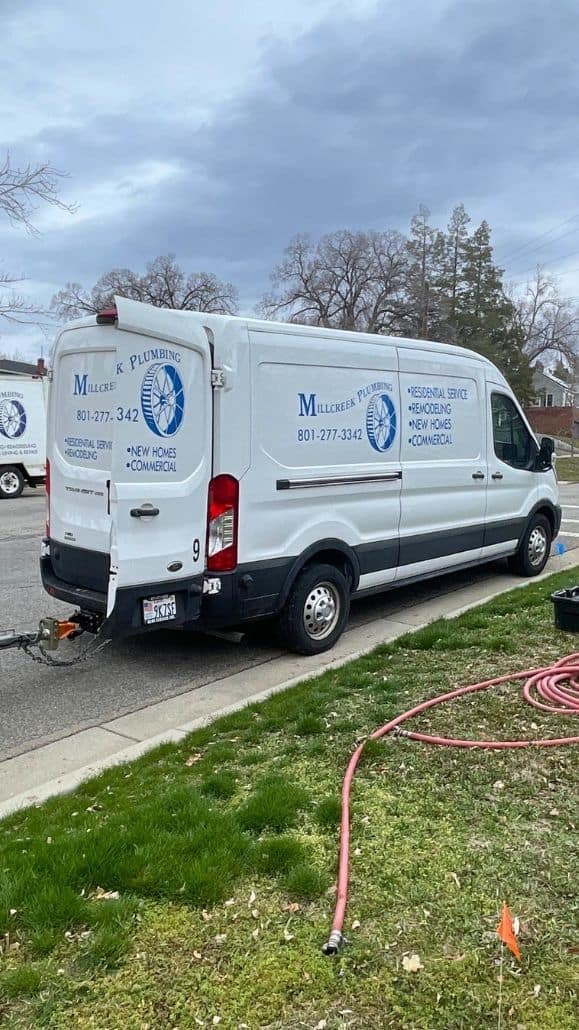
Here’s why people call Millcreek for drain cleaning in Salt Lake City: we arrive fast, give honest recommendations, and fix it right the first time.
- Locally owned and operated. We’ve been serving Salt Lake City since 2002 — not a national franchise, not a call center in another state.
- Fully licensed and insured in Utah.
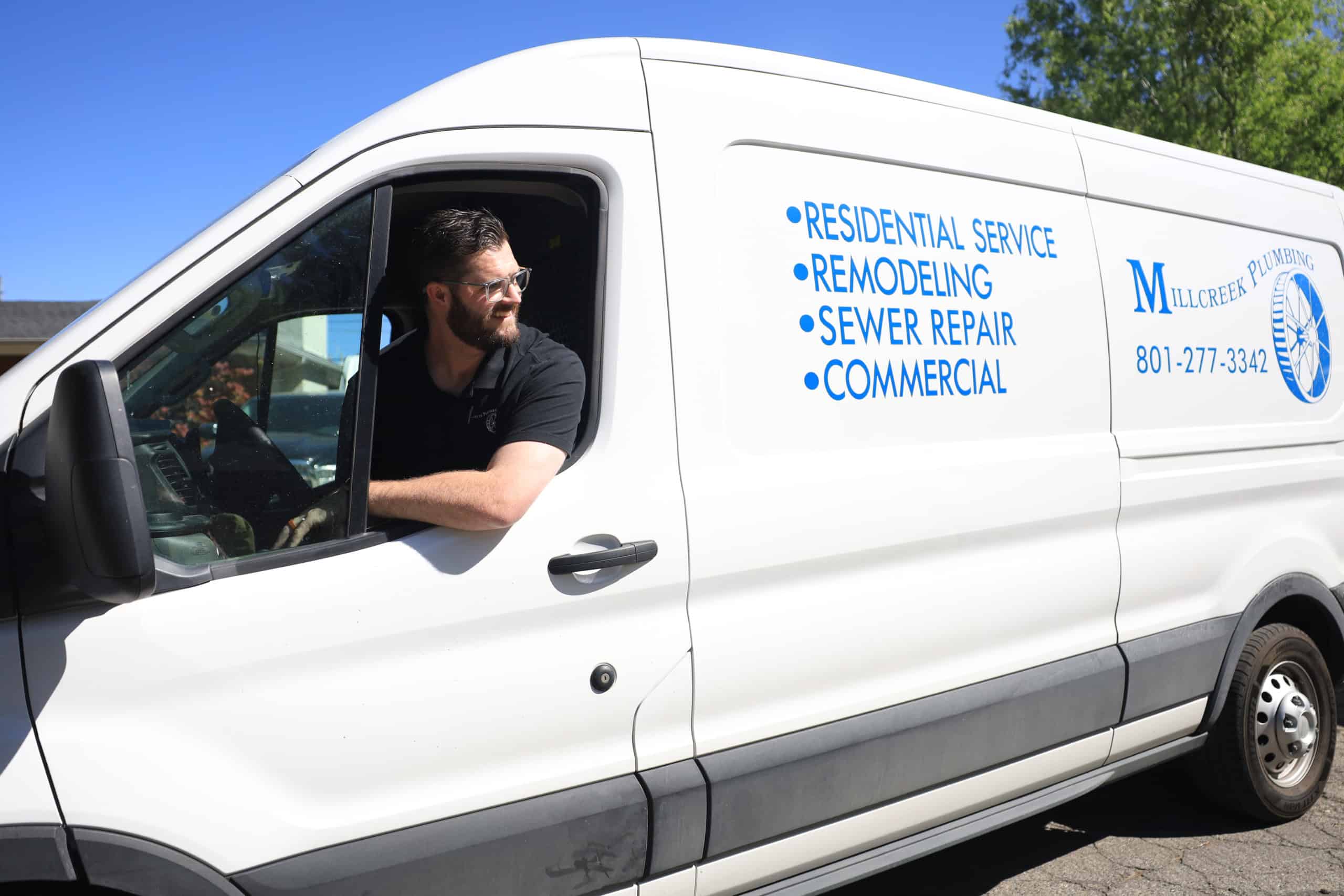
- Background checked technicians, in uniform, in marked trucks.
- Straightforward pricing. We’ll tell you what the job costs before we start, and that number won’t change when the invoice comes.
- Workmanship warranty on every job we do.
- We arrive prepared. Our trucks are stocked with snaking equipment and hydro jetting capability so we’re not making a second trip for tools.
- Shoe covers, drop cloths, and full cleanup. Your house looks the way we found it.
- Hundreds of 5-star reviews from your Salt Lake City neighbors.














How to Keep Your Drains Clear
Most drain clogs are preventable. A few simple habits — especially in hard-water Salt Lake City — can save you from a service call and extend the life of your pipes.
Use a drain strainer in every shower and tub. A $5 mesh strainer catches hair before it reaches the pipe. It’s the single most effective thing you can do for bathroom drains. Clean it after every shower.
Keep grease out of the kitchen drain. Pour cooled cooking grease into a container and throw it in the trash. Even small amounts add up on pipe walls over time, and Utah’s hard water accelerates the buildup.
Run hot water after every use. A 30-second flush of hot water after using the kitchen sink helps push grease and soap residue through the line before it has a chance to stick.
Don’t rely on chemical drain cleaners. Store-bought drain cleaner might get the water moving again, but it rarely removes the underlying buildup — and repeated use can damage older pipes. If the same drain keeps clogging, the problem needs to be looked at, not masked.
Watch what goes down the toilet. Flushable wipes aren’t actually flushable. Neither are cotton balls, paper towels, or anything other than toilet paper. These don’t break down and will eventually cause a blockage.
Schedule periodic professional cleaning. If your home was built before 1980, you have hard water without a softener, or you have mature trees in the yard, a professional drain cleaning every year or two is cheaper than waiting for a backup. Ask your tech about what schedule makes sense for your situation.
Frequently Asked Questions
How much does drain cleaning cost in Salt Lake City?
It depends on the drain, the severity of the blockage, and what method is needed to clear it. We give you a flat-rate quote before any work starts so you know exactly what you’re paying.
How long does drain cleaning take?
Most standard drain cleanings wrap up in an hour or less. More stubborn blockages or situations where we need to assess further may take a little longer. We’ll give you a realistic time estimate when we’re on site.
Do I need drain cleaning or hydro jetting?
Most clogs clear fine with snaking. Hydro jetting makes more sense when the same drain keeps backing up, when there’s significant grease or scale buildup, or when a camera inspection has shown coating along the pipe wall. We’ll assess when we arrive and recommend whichever method actually fits the problem.
Why does my drain keep clogging even after I’ve cleaned it?
Recurring clogs usually mean the blockage was cleared but the underlying buildup on the pipe wall wasn’t. Grease, mineral scale, and soap scum create a rough surface that catches debris quickly after a basic snaking. If you’ve had the same drain cleaned multiple times, it may be time for a more thorough cleaning or a camera inspection to see what’s actually going on inside the pipe.
Are chemical drain cleaners safe to use?
Occasionally and sparingly, yes. Regularly, no. Chemical cleaners can damage older cast iron and clay pipes over time, and they rarely address the root cause of a recurring clog. If you’re reaching for a bottle of drain cleaner more than once or twice a year on the same drain, call a plumber instead.
Do you offer drain cleaning for older homes with cast iron pipes?
Yes. We work on cast iron, clay tile, and PVC drain systems regularly. Older pipes do require a bit more care during cleaning — we take that into account and won’t use methods that could damage an already-fragile line.
Request An Estimate
Need an estimate on drain clearing in Salt Lake City? Fill out the form and we’ll get back to you fast. Can’t wait? Call 801-277-3342
"*" indicates required fields
Areas We Serve
See all areas we serve. Don’t see your town? Call us at (801) 277-3342 to confirm availability.