
Salt Lake City Water Heater Repair Experts
If you need Salt Lake City water heater repair, replacement or maintenance services today, call Millcreek Plumbing first! Reach us at (801) 277-3342 or fill out the form on this page for quick, reliable water heater services today.
Salt Lake City’s hard water doesn’t give our water heaters an easy life. Depending on the season we can see hardness levels between 10 and 18 grains per gallon, and that mineral content is hard on tanks, elements and anodes. And we see a lot of hot water heaters that fail sooner than they should because of it.
Water Heater Repairs in Salt Lake City That Last
Most of the water heater calls we get turn out to be repairable. A noisy tank, an element that quit, a thermostat that won’t hold a setting, these are usually fixable without replacing the whole unit. Our plumbers diagnose what’s actually wrong, explain the cost to fix it, and tell you straight whether the repair is worth it given the age of your unit.
Common Repairs We Handle:
- Rumbling or popping sounds from sediment buildup, which shows up often given how hard our local water runs
- Burned out heating elements on electric units
- Thermostats that no longer hold or read temperature correctly
- Pilot light and gas valve trouble
- Leaking or stuck pressure relief valves
- Leaks at supply lines and fittings
- Anode rods that have corroded away
We won’t push a replacement on a unit that still has good years left. If a repair is the right call, that’s what we’ll recommend.
When Does Replacing Make More Sense Than Repairing?
Age is usually what decides it. If your unit is under 7 years old, repairing it is almost always the smarter move. Between 7 and 10 years, it comes down to what broke and what it costs to fix. Past 10 years, especially with Salt Lake City’s mineral heavy water working against you, a new unit typically pays for itself faster than another round of repairs would.
We’ll walk you through the real numbers on both paths so the decision is yours to make, not ours.
Water Heater Replacement In Salt Lake City
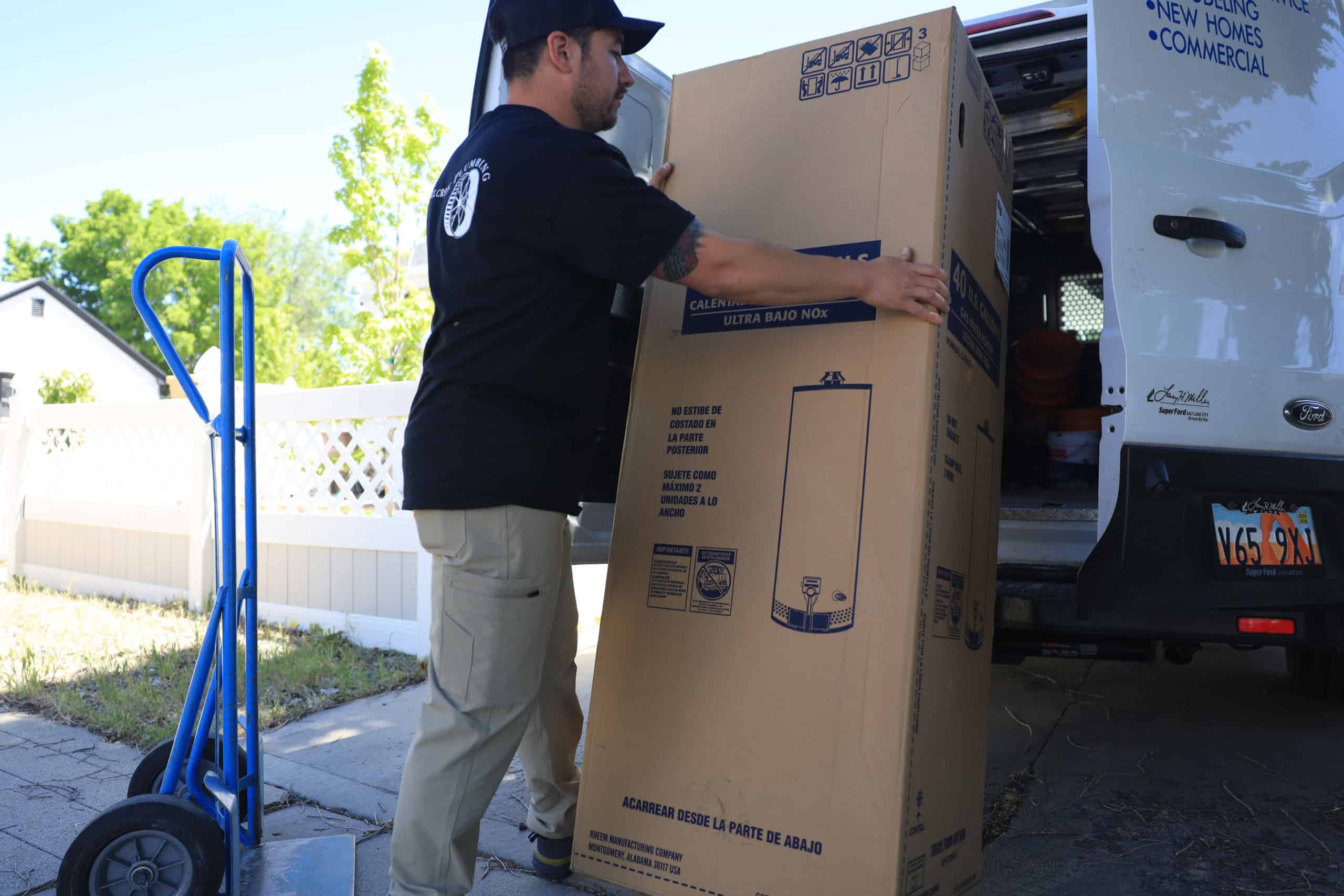
A replacement only holds up if it’s sized right, vented right, and installed to code. We’ve been called out plenty of times to fix installs that skipped one of those steps and started causing problems within a year or two.
Our trucks carry the replacement units we install most often, so a prompt installation is available on many models. You’ll get written pricing before any work starts, and everything we install is backed by our satisfaction guarantee. Permits and hauling away your old unit are part of the job, not an add on.
Water Heater Maintenance For Salt Lake City Homeowners
With the mineral content in SLC’s water, skipping maintenance is one of the fastest ways to cut a water heater’s life short. A yearly visit covers:
- A full tank flush to clear out accumulated sediment
- An anode rod check, since this is what protects the tank from corroding and it wears out faster in hard water
- Testing the pressure and temperature relief valve
- Inspecting gas lines and venting on gas units
- Checking electrical connections on electric units
Staying on top of this adds real years to a unit’s life and keeps it running efficiently.
Limited Time Offer
$50 OFF
Full Water Heater Installation
Mention this website special to claim
TAP TO CALL & SAVE
Water Heater Installation in Salt Lake City
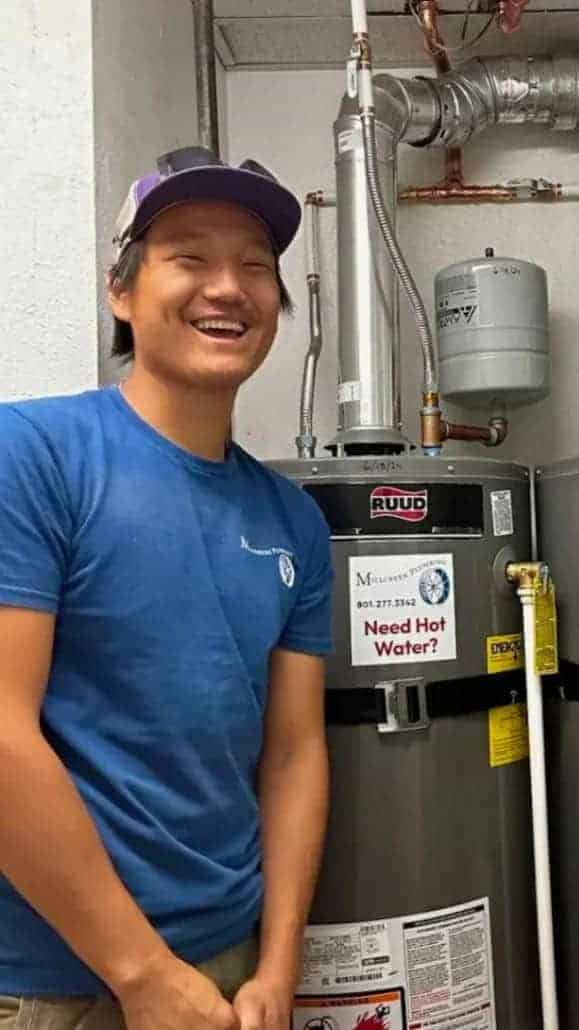
We install tank and tankless water heaters in Salt Lake City with gas, propane, and electric configurations, depending on what fits your home and budget.

Tank Water Heaters
Still the most common choice in Salt Lake City homes. Tanks hold between 30 and 80 gallons, keep hot water ready at all times, and last 10 to 12 years with regular maintenance. They cost less upfront and install more simply than tankless. Pairing one with a water softener, which we’d recommend given our local water, will stretch that lifespan even further.

Tankless Water Heaters
Tankless units heat water only when you need it, which means continuous hot water, roughly 20 to 30 percent lower energy use than a tank, and a much smaller footprint. The upfront cost runs higher, and in hard water areas like ours, tankless units need more frequent descaling to keep performing well. We’ll tell you that upfront rather than let you find out later.

Gas, Propane, or Electric?
Gas is the fastest to heat and the cheapest to run long term. Propane works for homes without gas service. Electric skips venting entirely and installs the simplest, which makes it a solid fit if your home is already wired for it. We’ll recommend based on your setup, not on whichever is easiest for us. If gas isn’t already run to where the new unit is going, our gas line installation covers that as part of the same job.
Customers Love Millcreek














Why Choose Millcreek For Salt Lake City Water Heater Repair
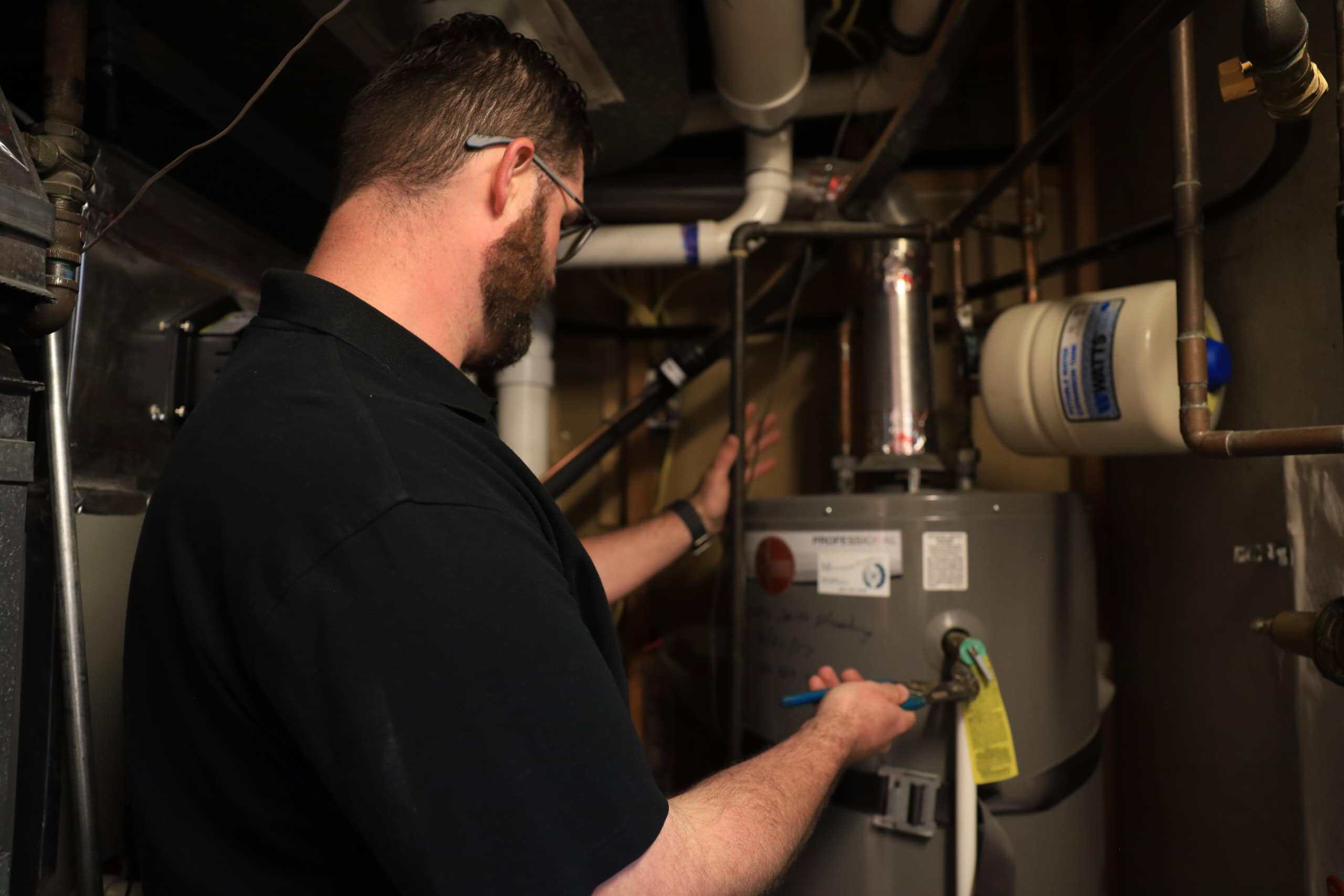
When it comes to picking a water heater repair company in Salt Lake City, you’ve got a lot of choices, but not all services are the same. At Millcreek Plumbing we’re not a franchise with a sales script. There’s no commission tied to selling you a new unit, so our plumbers tell you what they’d actually do if it were their own water heater.
We’ve been doing this in Salt Lake City since 2002, which means we’ve seen just about every version of what hard water and aging plumbing can do to a water heater: corroded tanks, undersized units in growing households, installs that were done wrong the first time. That experience shows up in how we diagnose and how we fix things.
Upfront pricing. Honest assessments. Fair rates. That’s the Millcreek Plumbing difference!
How A Replacement Works With Us
We don’t start pulling out your old unit before we understand what you actually need. Here’s how a typical replacement goes:
- We look at your household’s hot water usage and current setup before recommending a unit
- Your old water heater comes out safely and gets disposed of properly
- The new unit goes in to manufacturer specs and current Utah code
- Every connection is tested before we consider the job finished
- We run full checks on temperature, pressure, and performance
- We clean up before we leave
Most replacements take 2 to 3 hours. If we run into something unexpected, like a corroded shutoff valve or an undersized gas line, we handle it during the same visit instead of scheduling a second trip.
Get a Free Estimate
Have a question about your water heater or ready to schedule an estimate? Fill out the form below and we’ll get back to you promptly, Monday through Friday from 8am to 5pm. For a quicker answer, call us directly at 801-277-3342
"*" indicates required fields
FAQ
My water heater is making noise. Does that mean I need a new one?
Not necessarily. In Salt Lake City, noise almost always points to sediment. Minerals settle at the bottom of the tank and get superheated during the heating cycle, which causes that popping and rumbling sound. A flush usually clears it up, though we’ll check whether the element or tank lining took any damage first.
How do I know if my water heater is failing or just needs a repair?
A leaking tank means replacement, there’s no repairing that. Beyond that, it comes down to age and repair cost. A 5 year old unit with a bad thermostat gets repaired. A 12 year old unit with a failed element and sediment damage usually gets replaced. Anything in the 7 to 10 year range is where we lay out both options and let you decide.
How long does a water heater replacement take?
A standard swap takes 2 to 3 hours. It runs longer if you’re switching from tank to tankless, relocating the unit, upgrading gas lines or venting, or dealing with corroded connections on an older setup. If the relocation is part of a larger bathroom or kitchen remodel, our remodeling plumbing team coordinates that scope with the water heater work directly. Our plumbers bring what’s needed to finish the job in one visit and test everything before they go.
Is it worth repairing a 10 year old water heater?
Sometimes yes, sometimes no. If the repair is cheap and the tank is in good shape, go for it. If the unit is north of 10 years and the repair is significant, replacement usually makes more financial sense. We’ll tell you honestly which one applies to your heater.
Why is my water heater leaking?
Depends on where the water is coming from. A leak at a fitting, valve, or T&P line is almost always repairable. A leak from the tank body means the steel has corroded through, and the unit has to be replaced. Don’t ignore this one. A full tank failure floods fast.
How often should I flush my water heater in Utah?
At least once a year. If you don’t have a softener, or you’re on a well, every six months is better.
Will you take away my old water heater?
Yes! Removal and disposal are part of the replacement job.
My water heater just failed. How fast can you get here?
Call 801-277-3342. We dispatch same-day calls throughout the Wasatch Front and usually have an opening on short notice.
Areas We Serve
See all areas we serve. Don’t see your town? Call us at (801) 277-3342 to confirm availability.